
The future of methane compliance is measurement-based
Methane emissions monitoring is moving from estimates towards measurements.
For oil and gas operators, the EU Methane Regulation (EUMR) and reporting frameworks such as OGMP 2.0 are driving this shift. Estimates are no longer enough. Operators need reliable emissions data showing how much is emitted, where it originates, and whether source-level measurements match site-level measurements.
This puts the measurement quality under the spotlight.
Multi-parameter approach to emissions measurements
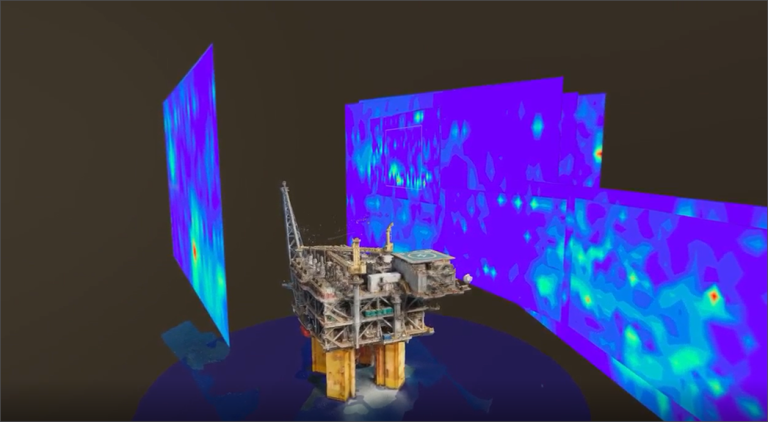
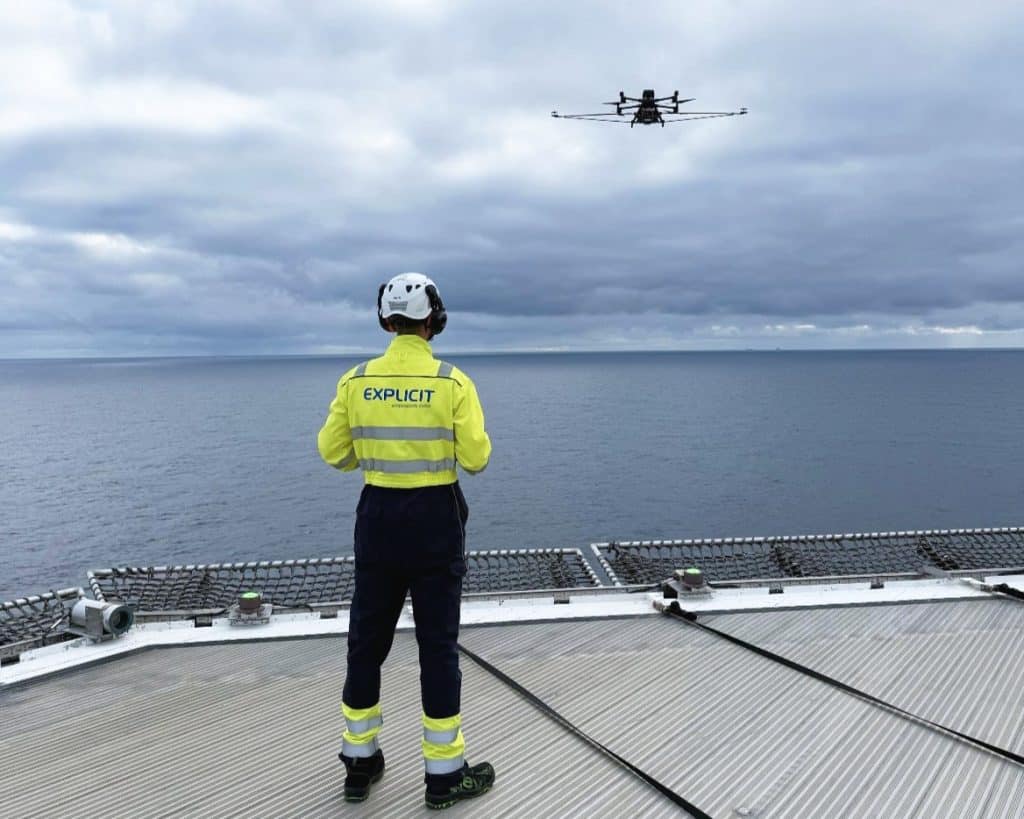
Explicit’s patented Drone Flux Measurement (DFM™) Method leans on a multi-parameter approach to emissions monitoring. While the drone flies downwind from the site, along every transect of the flux wall, the DFM™ payload simultaneously measures:
- Methane (CH₄)
- Carbon dioxide (CO₂)
- Wind speed
- Wind direction
- Temperature
- Pressure
- Humidity
This matters because CH₄ emissions do not exist in isolation. Wind speed and direction determine how a plume disperses through the atmosphere, while temperature, pressure and humidity provide additional context for the conditions on site.
The DFM™ Method uses these parameters, captured continuously during the survey, to calculate net emission rates for both CH₄ and CO₂ (kg/h) across the inspected area, without relying on atmospheric modelling or secondary data inputs.
This enables reliable source allocation, helping operators distinguish between individual sources, identify intermittent releases, and quantify low-emitting sources that may otherwise go undetected.
Reconciling the gap between source and site-level data
A complete emissions survey needs to connect how much is being emitted with where the emissions originate. Source-level measurements can identify individual emission sources, while site-level measurements provide a picture of the total emissions captured across the survey boundary.
Having both lets operators compare the datasets and investigate the discrepancies. This comparison is especially crucial for OGMP 2.0 Level 5 reporting and is required under the EUMR, which mandates that operators quantify emissions at both the source and site level and reconcile the two.
By combining auxiliary DFM™ data with CH₄ concentration, Explicit can support reconciliation using wind data to track source origin and other measured parameters to verify the identified source. This unique data transparency provided by the DFM™ Method on how emissions data ‘stacks up’ provides operators with a high level of confidence in their emissions reporting.
From field data to actionable emissions intelligence
Regulatory-grade monitoring depends on what happens after the flight: turning field data into information operators can use with confidence, verified under the same conditions in which emissions were measured.
Through our ISO/IEC 17025-accredited, cloud-based Emissions Lab (E-Lab), field teams and analysts can review data in real time, verify measurements, and identify where additional sampling may help while still on site.
Partner with Explicit for regulatory-grade reporting
The direction of the methane regulatory landscape is clear. Better measurements, greater transparency and stronger evidence behind reported emissions.
For operators, that means choosing a monitoring partner not for detection capability, but for how reliably it can quantify emissions and support the reporting and reconciliation process that follows.
Through our methodology, we provide actionable intelligence and insights to:
- Improve flare performance
- Strengthen operational controls
- Identify intermittent emission sources
- Improve confidence in emissions reporting
- Support reconciliation between source-level and site-level emissions
If EUMR and OGMP 2.0 Gold Standard reporting are on your roadmap, our team can help you get there with measurements you can confidently stand behind.
Get in touch and start your journey!